
A circular polarising filter allows you to filter out light reflecting off certain surfaces.
I use a Hoya circular polariser with a 52mm thread for my smaller zooms and my 50mm prime lens. It looks like this:
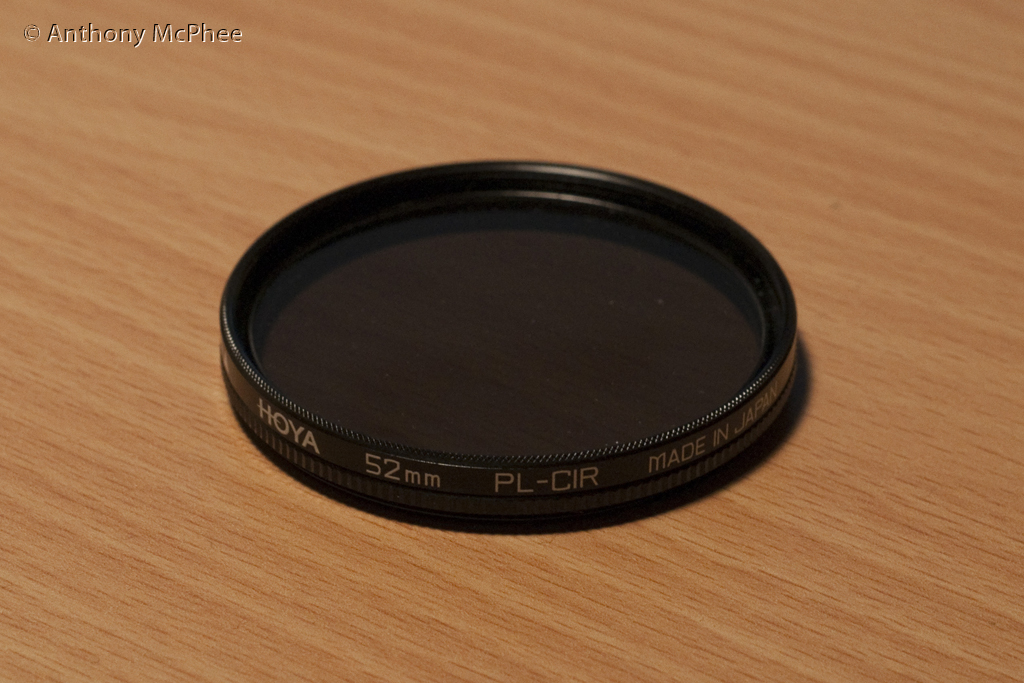
It kind of looks like the lens you might see on a pair of sunglasses, and it actually works in a similar way (if those sunnies are polarised, that is).
The polariser can be twisted around and the changes it makes can be seen real-time through your viewfinder.
Without getting into the physics of it all, the resulting photo can be dramatically different to one taken without a polariser.
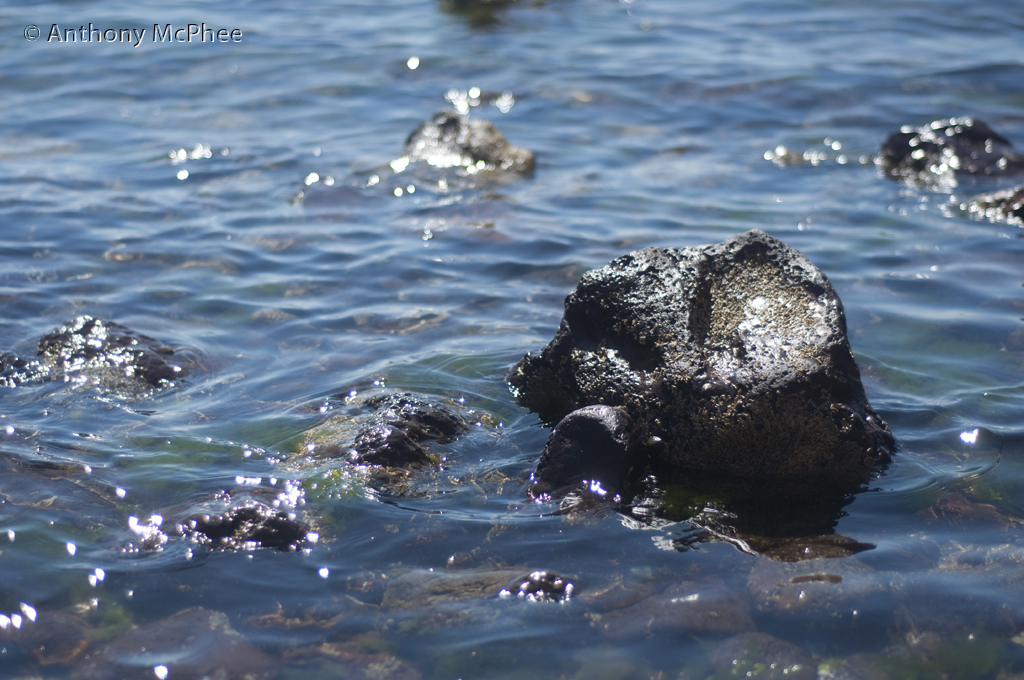
Here’s a shot with the circular polariser fitted – but angled in the wrong position so reflected sunlight is allowed to pass through:
Here’s what happens when the circular polariser is twisted to block reflections:
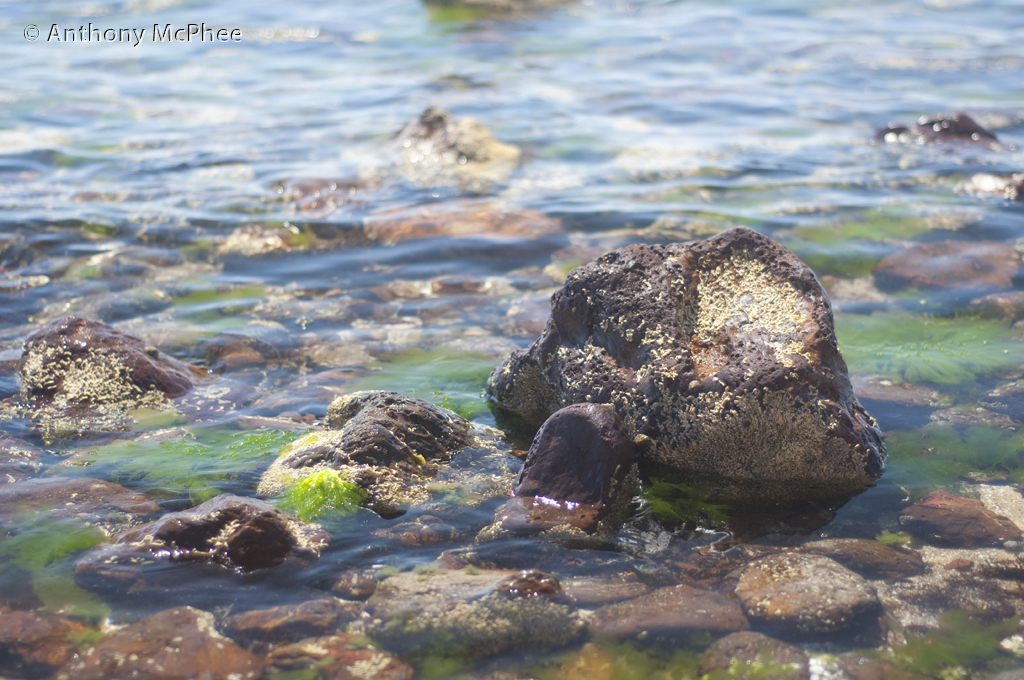
See how the surface of the water turns from relatively opaque to very clear. The true colour of the rocks – previously hidden beneath contrasty glare from the sun – can now be seen too.
So in scenes where there’s a lot of sun glare, a polariser can be useful for revealing what’s actually there.
It also makes the circular polariser very useful for taking photos through glass windows, which often present distracting reflections. This is handy to know when you want to take snaps of scenery from inside a moving car or bus.
Polarisers are also used to increase contrast in scenes with blue skies and cloud. This is something I will try to show later.
 Ant's Cars