Renting a car in the States presents a fine example of what happens when there’s a lack of government oversight of a particular industry – the rental companies make up their own rules and the consumer generally gets screwed unless they know what to look out for. The “final price” listed at the bottom of the website on the rental page is rarely just that, as extra fees are piled on upon pick-up (and sometimes drop-off) of the car. Over the last couple of years I’ve rented about a dozen cars across the US, so I thought I’d provide a guide what you should consider before you can blaze off down Route 66 or the Pacific Coast Highway.

Is it worth it?
This is a good question to ask yourself before you start browsing the car rental sites. If you’re planning to spend most of your time in the larger east-coast cities such as New York or Boston then a rental car will likely be more trouble than it’s worth. Parking can be a painful – and alarmingly expensive – experience, even in the smaller cities, and it’s often easier to get around with public transport (especially in New York). A notable exception to this is Los Angeles, which has terrible public transport options and attractions that are spread all over the place (Anaheim, where you’ll find Disneyland, is about 90 minutes’ drive from Hollywood in LA traffic).

Inter-city driving is where the rental car becomes a much more attractive proposition. The freedom it provides is unmatched, and small-town America – just a blur on the bus-ride between Philly and Chicago – becomes an interesting destination in and of itself. Be aware, however, that the bus rides between the big cities can be an absolute bargain, especially if booked early. If you’ve set aside just one day to get between two big cities, these buses could be the more cost-effective option. Check out MegaBus (us.megabus.com) – which is terrible but cheap – or GotoBus (www.gotobus.com), who use a bunch of local providers (the one between New York City and Boston was actually pretty good). Having said that, if there’s a group of four or five of you, sometimes a rental car is the cheaper (and more pleasant) option.
One plan that I’ve seen a few people attempt is to one-way-rent a car only on the days they’re travelling. Sadly, for shorter trips, this often doesn’t work out. For example, friends of mine were planning on visiting New York for a couple of days from Pennsylvania. They thought it would be a good idea to only rent the car one-way from State College to New York, then make a separate booking for the drive back. Unfortunately, they didn’t factor in the one-way rental fees, $100 each way, adding an enormous $200 on top of the cost of the rental. Since they were only paying $60 a day in the first place, it worked out cheaper for them to just leave the car sitting in a back street in Brooklyn for a couple of nights before driving it back.

What you’ll need
Before picking up a rental car, a foreign driver will need to have a few essentials:
- Driver Licence: This usually has to be a full licence, sometimes held for at least one year depending on the company you rent from.
- Credit Card: Most agencies require a proper credit card – not a debit card – with enough credit on it to cover the full value of the rental. A hold is then usually placed on that card to the value of the rental. Some rental companies are starting to accept debit cards, as long as you can provide evidence of onward travel (ie, a plane ticket home).
- International Driving Permit: I’ve never actually had to use one of these, and I highly doubt anyone with a licence in written in English will in the United States. However, it’s a good idea to have one just in case, as chatter on the internet suggests local police might not be happy if you can’t show them one.
Some rental companies might require more from you, and there are variations on the credit card requirement as noted above, but in general these three things should cover all your rental needs in the States.
Also take note that just because the hold is placed on your credit card, it doesn’t mean you have to pay for the rental with it. Upon drop-off inform the receiving staff that you’d like to pay with something else if required.

Choosing a rental agency
This is where the real slog begins. Thrifty, Avis, Hertz, Alamo, Enterprise, National, Budget… the options are seemingly endless. Then there’s the third-party sites like rentalcars.com who’ll offer you a car from any one of these providers, often, seemingly, for a better price. It can be hard to compare the prices too, as some providers exclude – or even actively hide – additional fees such as one-way fees and insurance from the base price.
What to look out for:
- Insurance: Some resellers include insurance in the cost of the rental, most of the agencies themselves don’t. I’ll go into more detail a bit more later on, but most foreign travellers will need some sort of rental car insurance, and so the price needs to be factored in.
- One way fees: These are rarely factored in, and often buried deeply in the fine-print. Expect to pay at least USD$100 if you plan on dropping the car off in a different city. A friend of mine successfully argued with a rental agency that the third-party site he booked the car through made no mention of one-way fees, so they were waived. I wouldn’t count on this happening every time though.
- Taxes: Sometimes included, sometimes not, they don’t usually amount to much.
- Airport fees: This is a fee for picking up or dropping off the car at an airport branch. It’s usually included in the base price but sometimes it isn’t if you’re doing a one-way rental.
- Other extras: There’s an array of little extras you can add on to your rental that some sites (especially third-party ones) will include in the price of the rental. It may make the value proposition better depending on what you’re after. See the “Optional Extras” section below for more details.
- Young driver fees: These can significantly add to the cost of the rental. They usually apply to a renter under the age of 25 and often cost around USD$25 a day. The fee is often well-hidden on both agency and third-party websites. Some websites such as Tripwheels (www.tripwheels.com) offer young driver packages that are significantly cheaper than paying the daily young driver fee. This is usually the best way to go if you’re under 25. Note that you’ll struggle to rent a car from anyone if you’re under the age of 21.
- Extra driver fees: A fee you pay for each additional driver of the car. These are often included in the rental as a “bonus” by third-party sites. Extra driver fees can be pretty expensive if going through an agency, so it pays to hunt around if you’re sharing the drive.
The best idea is to total up the cost of a rental, with all the extra fees added, to then compare with similar options from other sites. You’d be surprised by how much prices vary between providers.
Pre-payment vs post-payment
Some sites let you pay for the cost of the rental at booking, usually for a discount (which is sometimes substantial). The downside is it’s unlikely to be refundable after a certain date, so if plans change you might have to forfeit the rental.
Most sites let you pay for the rental upon drop-off. Many allow you to cancel at any time before pick-up, so there’s no risk in making a booking, then hunting around to see if there’s a better deal to be had elsewhere.

Which agency is better?
The big rental agencies listed above all provide roughly the same on-the-ground service. Cars tend to be newish and in good condition. Smaller companies can be a bit riskier, so it’s worth checking out reviews before booking. Note that most people only post a review about rental agencies when they’ve had a poor experience, so feedback is often overwhelmingly negative when chances are your experience will be fine.
Personal recommendations:
Generally it’s the third-party sites who will offer the best price once essential extras such as insurance are taken into account. A personal favourite is Tripwheels. This is a UK-based company that provides all-in-one deals with all the essential insurance already included in the price, so there shouldn’t be any surprises when it’s time to pick up the car. They also offer excellent young driver packages, which includes all insurance and covers the young driver fees. The only thing not included are the one-way fees, which need to be paid upon drop-off of the vehicle. The site informs you of this, however, and lets you know how much they’ll be. Note that Tripwheels charge in GBP, so you might have to take into account international conversion fees from your bank. I’ve also heard good things about USrentacar (usrentacar.co.uk), who provide a similar service.
These operations require up-front payment, which can be a bit nerve-wracking if you’ve never used them before, but I’ve never had any issues with Tripwheels. Upon booking and payment, you’ll receive a rental voucher with the details of your chosen package. It’s a good idea to print this and take it to the agency upon pick up. These agencies also require bookings to be made several days in advance.

An agency I’ve booked directly with on several occasions is Alamo (www.alamo.com). Before booking I make sure the “Resident of Australia” box is ticked and the prices magically become much cheaper, with the essential insurance included! An American friend of mine attempted to book the same car on the same day and the price for him was over $100 more. Make sure you don’t sign up as a member though, as for some reason this bounces the prices back up (this may have been fixed by now).
I’ve rented from Thrifty, Alamo, National and Enterprise. The cars have all been of varying age and quality but they’re generally good to excellent. If you get a dud, you can usually ask for a different car.
Insurance
This is a big one, and as a disclaimer I have to point out that every agency offers a slightly different insurance package, and your needs may be different to my own. Furthermore, I’m no expert on these things, and your best bet is to read the rental agreement carefully yourself before committing to everything. Below are the general rules I follow when choosing insurance options.
What’s on offer
Most rental agencies offer variations on the following:
Collision Damage Waiver/Loss Damage Waiver: This is usually the one in which the agency will go to great lengths to inform you that “The CDW is not insurance”. It generally covers any damage you make to the car itself, excluding wheels, windows, tyres, the underside and the roof (basically any place that’s more likely to be damaged due to careless driving), and a bunch of other exclusions. It certainly sounds like insurance to me, and I suspect the agencies claim otherwise as a loophole to prevent customers from using their travel insurance from covering any damage to the vehicle. I consider this to be essential, as it’s almost never covered by travel insurance (see below).
Supplemental Liability Insurance/Extended Protection: This covers damage you might do to someone or something else while driving the vehicle. It’s usually covered for “up to $1 million” in damages. Most states already have a basic minimum level of insurance that the rental company must provide, and SLI/EP is additional insurance on top of that. This type of insurance is often specifically excluded in Australian travel insurance plans, so I consider it to be essential.
Personal Accident Insurance: Covers medical fees if you have an accident. It usually comes with a bunch of exclusions attached. I never get this as it’s covered by my own travel insurance.
Personal Effects Coverage: Covers personal items stolen from the vehicle. Once again it comes with a bunch of exclusions. I never get it because I don’t usually leave valuables unattended in the car. Note that some travel insurance policies won’t cover goods stolen from rental cars.
Roadside Assistance: I consider this to be “Idiot insurance”. If you’re prone to locking your keys in your car or running out of petrol, this will cover the towing fees incurred. It also covers flat tyres. I never get this, but if you don’t know how to change a tyre or you’re hopeless at car ownership, it might be worth it.

Won’t my travel insurance/credit card insurance cover this?
After reading through many product disclosure statements for travel insurance plans in Australia, the answer to this question is almost always “no” when it comes to the collision damage waiver and supplemental liability insurance.
Australian travel insurance usually covers the vehicle rental excess costs only. However, as the collision damage waiver isn’t technically insurance, it’s not covered, and hence neither is any damage to the car as well.
Liability insurance from travel insurance providers also usually specifically excludes cars (or “mechanically propelled craft”, as I saw in one PDS), and so there’s no coverage for supplemental liability insurance either.
All of the above is subject to change, and I have seen dedicated rental car insurance plans offered in other countries such as the UK, so it may also depend on your country of residence. It’s also a whole other kettle of fish when it comes to US citizens, which I won’t go into here.
For personal effects/accident insurance, it depends on your provider.
Third-party insurance
Some third-party sites do offer insurance in place of a collision damage waiver. The downside is, if you have an accident, you’ll be out of pocket until the third-party reimburses you. It can be cheaper than buying it through the agency. I have friends who have used this option but I decided it wasn’t worth the hassle if something goes wrong.
“But I’ll never have an accident! I’m a careful driver!”

It doesn’t matter how careful you are at driving if someone backs into your unattended car in a carpark. This happened to us in San Francisco. I called the rental company, told them what happened and returned the car at the end of the trip. They didn’t bat an eyelid after seeing I had the collision damage waiver included. You never know what’s going to happen.
“Oh, I thought you wanted that.”
While researching rental cars I’ve come across plenty of stories of people claiming they were sold insurance they didn’t agree to while picking up the car at the counter. I always thought it was probably their fault for not quite understanding the admittedly bewildering array of options provided to them.
However, this actually happened to me in Washington. I said no to all insurance as I already had it through Tripwheels, only to find that roadside assistance was selected and an extra fee was about to be charged when I was going over the contract. I informed the staff member who guiltily reprinted the contract with the option unticked and the price reduced. It always pays to carefully read the rental agreement before signing off on it, as there are some unscrupulous people out there looking to bump up their commission.
Also, take care that if you buy an all-inclusive package from a third-party that you get all the options listed in your rental voucher. Several times I was offered pre-paid fuel when it was already included in the young driver package purchased from Tripwheels.
Optional Extras

This is how rental companies make their money (apart from insurance), little optional extras such as satellite radio or a GPS that are charged at a daily or weekly rate. The most common ones are:
GPS: Some people ask why would you need this if you have a smart phone. I actually prefer a dedicated GPS since then I won’t be cooking my smart phone’s battery. They also come with a proper mount, which means the driving experience is safer, and features such as lane guidance usually work much better on dedicated systems. Lane guidance is a god-send on American freeways, especially in cities like New York, LA and Philadelphia. Also, foreign travellers with no phone data might find themselves without any maps should they stray off the route calculated by Google Maps.
If you’d rather save the money, the Here WeGo Maps app (link), formerly Nokia’s HERE Maps, allows you to download entire states easily onto your phone for offline use before you leave, so you don’t need phone reception while driving. It’s available on Android and iOS.
If you’re travelling a lot and renting cars all over the world, it might be worth buying your own GPS. Some of the high-end ones come with unlimited global maps. Note also that some of the nicer cars come with a GPS built-in.

Satellite radio: American satellite radio is awesome. There’s heaps of channels to flick through and the audio quality is pretty good. Having said that, I never choose this option since I prefer to use my phone (most rental cars in America come with bluetooth or at worst an AUX port).
Pre-paid fuel: Some places offer pre-paid fuel for less than the average fuel price in the area. Sometimes this claim is bullshit, sometimes it isn’t. The idea of pre-paid fuel is you get a full tank at the start, and you try to return the car empty. If you don’t get pre-paid petrol, you return the car full or pay an exorbitant refuelling fee. The pre-paid fuel option is only really worth it if you know for sure that you can return the car completely empty, which can be tough to gauge. It’s much easier to not choose this option and return the car full, just make sure you don’t forget to fill up before drop-off like I did.
Baby seats: I have not much to say on these, you either need them or you don’t. I like that some places allow you to option up to six baby seats. Imagine a people carrier full of babies.
Phone chargers: Usually a rip-off, wait until you find a Best Buy or Walmart.
Choosing a car
Classes
Rental cars come in several classes, from economy to luxury, with special classes like convertibles and sports cars also available. Young drivers (under 25) are often prevented from renting cars from some classes, usually sports cars, luxury cars and large 4x4s.
The best value car class is usually intermediate, as you won’t land a tinny little box that’ll rattle around on the highway during long trips, and they’re often only about $40 more than the cheaper cars. The full-size class offers cars such as the Dodge Charger, but also boring boxes like the Nissan Maxima, so it can be a bit of a gamble. The premium class is home to the likes of the Chrysler 300 or the Chevy Impala, though again, there are more undesirable cars here too. It can be hard to tell what you’ll end up with, though don’t be afraid to ask for something else if you don’t like what’s offered to you.

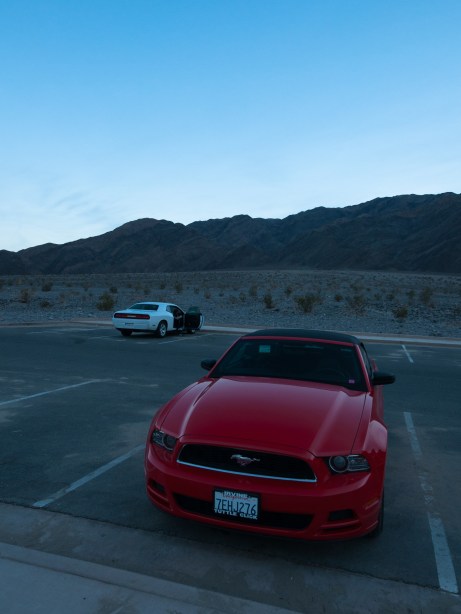
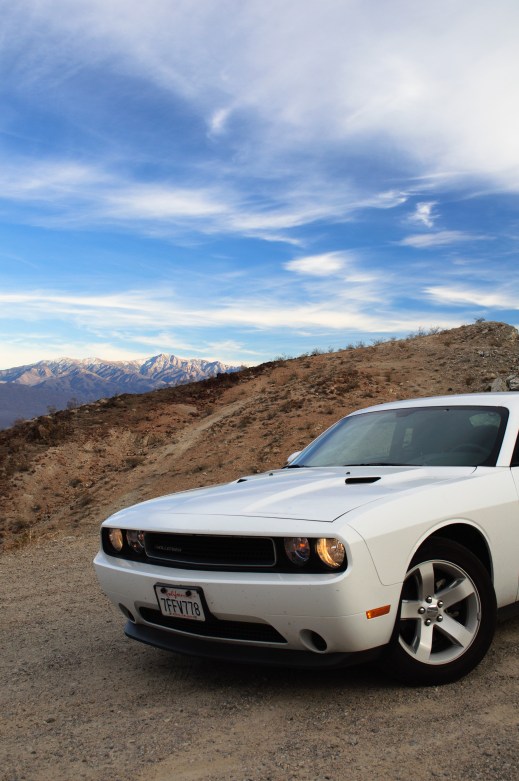
Take note that the sports car class offers cars in their base specification, so that’ll be the Mustang, Challenger or Camaro with the V6, rather than the V8 (Maybe even the 4-cylinder EcoBoost for the new Mustang, though I’m not sure). Having said that, I have no regrets about choosing a Challenger for a road trip up the west coast, it’ll be something I remember forever. Some companies offer the more powerful variants (see the Hertz Adrenalin Collection), though for a substantial premium.
Upgrades
Paying for an upgrade in car class can be a bit of a minefield. In general, if the staffer offers the upgrade to you, it’s might be a good deal. If you ask for the upgrade, they’ll usually give you a terrible deal unless you’re willing to haggle for hours. I’ve actually had staff members tell me to simply re-book a better car online in front of them, as the online price will be cheaper than what they can offer. It always pays to know roughly how much more the upgraded car would have cost if you booked it online originally.
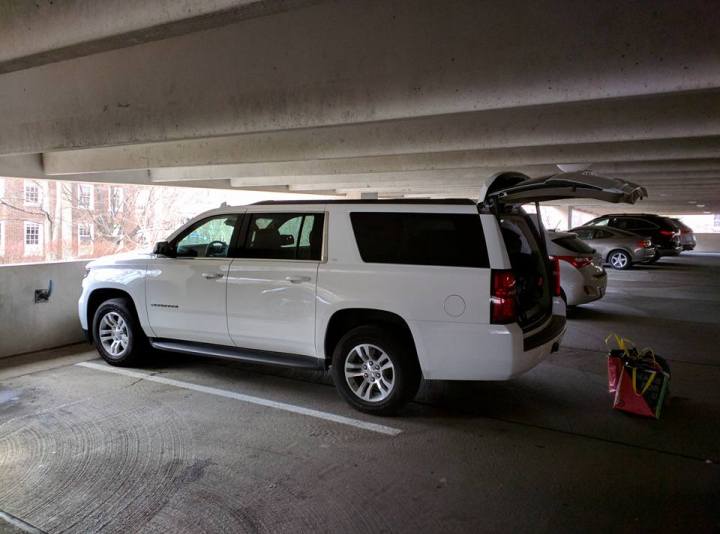
Free upgrades are different. These are surprisingly common and happen when the car class you originally booked has sold out. The best free upgrade I’ve ever landed was going from a 7-seat people carrier to a monstrous (and surprisingly high-tech) Chevy Suburban long-wheelbase.
Inspecting your car
It’s a good idea to look over the car you’re renting before driving out of the rental agency. The company should have given you a condition report outlining any damage to the car. If there’s damage on the car – especially the roof, windows and anywhere else not covered by the loss damage waiver – that’s not in the condition report alert the staff straight away. They should either amend the report or source you a new car.
If the car’s crap, take it back
Alamo offers a guarantee on their cars that if you’re unhappy with it, you can return it any time during your rental and grab another one. A friend of mine did this when he was really keen on trying out a Fiat 500 while staying in Hawaii, but was given a Hyundai instead. He returned the next day and swapped it for the Fiat. I assume other agencies offer this too, but check with them at pick up. All should be able to swap the car out if it turns out to be faulty.

Personal recommendations
Most of the cars I’ve driven fall under the “it’s ok” category, and none were truly awful. Some are better than others though.
If you’re renting a 7-seat people carrier, the dud is the Dodge Caravan. It doesn’t have a reversing camera, making it irritating to park. The best ones are the Toyota Sienna or the Chrysler Town and Country, both of which are easy to drive and comfortable for all passengers. The Town and Country even has a DVD player. Be wary of upgrades to 7-seat 4x4s, they often have less space in the back for passengers (except for the Suburban and probably the Tahoe, though they’re much more expensive).
All the intermediate cars are essentially the same shade of boring. I drove a battered, rattly Ford Focus on one occasion, its redeeming feature being the best implementation of a reversing camera I’d ever seen. I also drove a Nissan Altima from Washington to State College via Philadelphia. A boring choice, but it was extremely smooth and comfortable, well-suited to the long trip.
I’ve driven two Fiat 500s in Hawaii (one was broken, so I had to swap it for another). They’re enjoyable little cars to drive but fairly noisy at freeway speeds. I wouldn’t recommend one for a long road trip on the mainland. A small car better suited to longer trips would be the Hyundai Elantra.

I’ve driven two small 4x4s in LA, the Jeep Cherokee and the Dodge Journey. The Jeep was surprisingly very engaging to drive with nice handling and decent urge from the engine. The Dodge had better cargo capacity, however, taking 5 people and all their luggage almost comfortably.
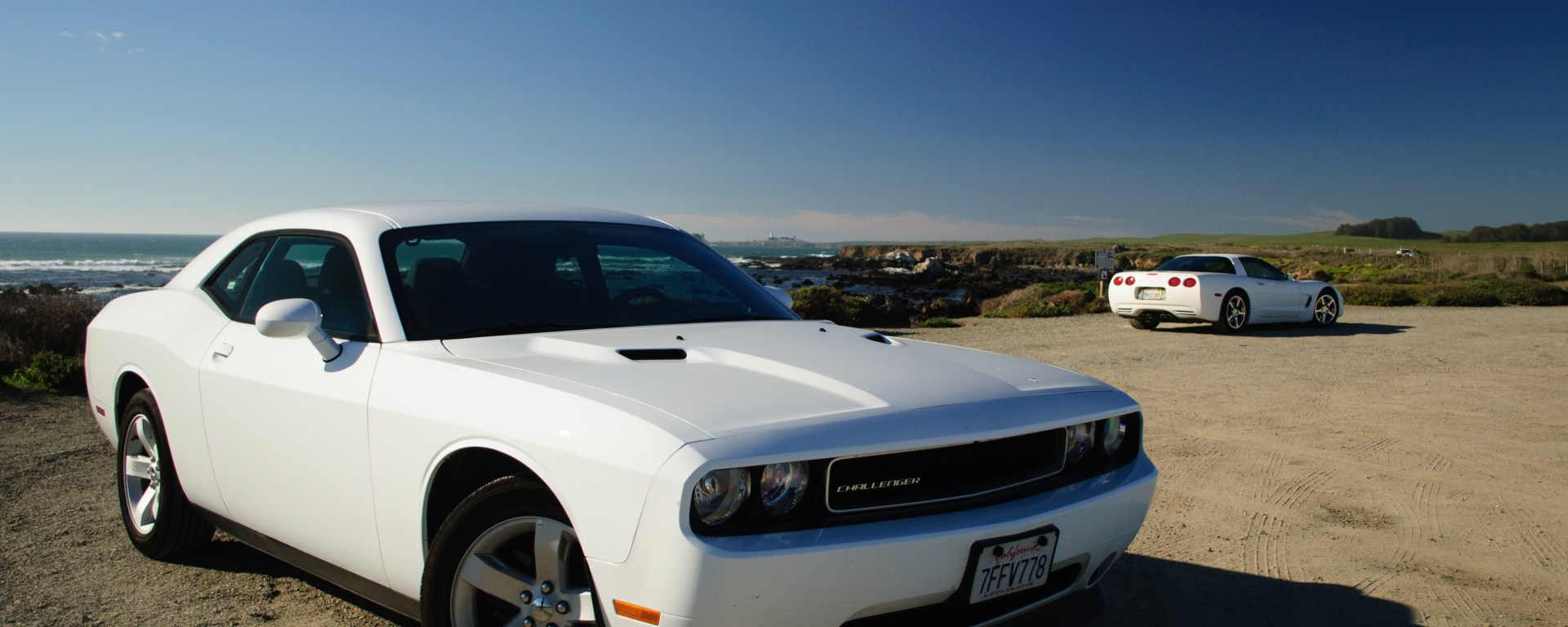
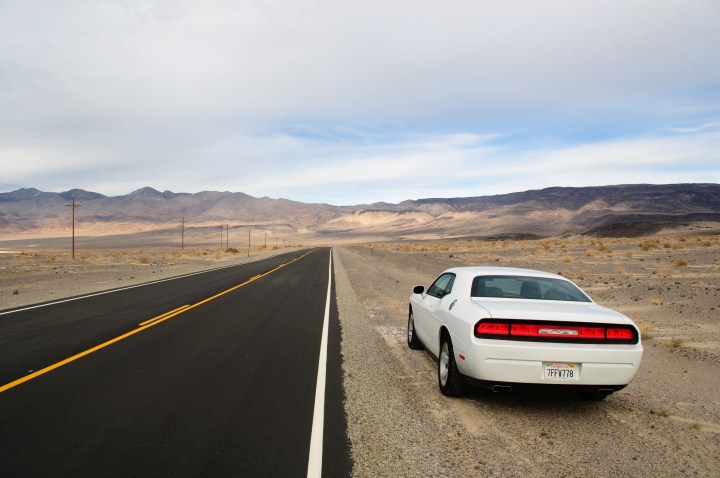
The absolute highlight was driving a Dodge Challenger up the west coast from LA to San Francisco, then through to Las Vegas via Yosemite and Death Valley. One of the great American drives in an American muscle car. The car itself is wide and the visibility out the back is terrible, but who cares, it’s a muscle car in America. These cars are actually pretty poor value, offering less physical car (and pretty average fuel consumption) for more money, but sometimes you have to spend a bit more for the memories.
Other tricks and things to look out for
Renting from an airport vs renting from a city location
Due to airport fees, sometimes it’s cheaper to rent from a city location as opposed to the airport you arrive in. If the taxi/Uber/public transport ride from the airport isn’t too painful or expensive, this can be an easy way to save money. It also could save a day’s rental if it means you can pick the car up the next day.
Some airport locations are cheaper than other too. For example, Long Beach Airport was much cheaper to pick up a car from than LAX.
Rent for one day, pay for one day. Rent for one day one hour, pay for 2 days
Cars are rented by days, not hours. If you pick up a car at 9AM on Saturday, and return it at 11AM on Sunday, you effectively have to pay for 48 hours, even though you only had the car for 26 hours.
Late drop-off
If you’re dropping the car off after-hours, some agencies say you can drop it off whenever that evening, which can give you an extra few hours up your sleeve. This isn’t really applicable in big city locations, which are usually open much later.
Weekly rentals
There’s often a discount for rentals of a week or more. If you’re renting for six days, see how much it’ll cost to rent for seven, you might be surprised.
Driving into Mexico or Canada
This really depends on the rental company. We had no issues taking our rental cars into Canada. I never tried driving into Mexico, though I understand many rental companies don’t allow it.
Turo

Car-sharing service Turo allows you to rent a private car from a regular person – it’s like AirBnB for cars. I never tried this, but be warned the insurance usually doubles the cost of the rental. The last time I checked foreigners had to be over 25 to rent a car. The prices are often cheaper than equivalent cars from rental companies, especially for luxury cars (even with insurance included).
Off-road or snow driving
Generally driving off-road isn’t allowed in any of the regular car classes. Some agencies might offer it for the “proper” 4x4s, but check before renting. Most agencies say you can’t take a rental car where snow-chains are required.
 Ant's Cars
thank you, i will be renting a car for 3 weeks in the west cost and few days in the east this comming summer, it looks like i will use tripwheels as their price is good 850usd for 3 weeks vegas to LA ,intermidiae size.
regards, danny from Israel